by Patricia Heller
If there is any alcoholic beverage more misunderstood that Sake, I know not what it is. And, I speak from experience. The first time I had it, undoubtedly in a Japanese restaurant many years ago, was the last (I likened it to rubbing alcohol, which I admit I haven't tasted), until recently, when I spotted a variety of sakes (at a variety of prices) in a local Japanese market. I had driven by it for years and my decision to take a look not only revealed a plethora of wonderful foods, but allowed me to discover the pleasure of a long-disdained drink.
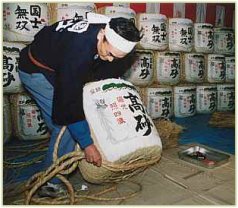
The cool news: These high-end sakes are meant to be drunk over ice, or at least chilled. Depending on what you get (tasting several is the only way to go, since each of you will taste them differently), some actually have a creamy quality. Whatever you do, savor each one…they are full of surprises. Now, surely, to each his own. Millions of people drink "restaurant" sake and like it just fine. But trust me on this: If you like that, you're going to love the fine sakes available and, if you don't, you are in for a treat. In fact, sake aficionados will tell you that it's actually a spiritual experience to drink sake, that they get an emotional lift from it, not to mention energy from the nutrients that do wonderful things for the human heart and imagination.


Simply put (which is impossible, because there's lots to know about, but I'll try), sakes are wines made from rice and water and while various sources say "it's the rice" (anywhere from twenty eight to more than sixty varieties of rice cultivated are ideal for sake production, depending on the source) it really is a combination of the skill of the brewer, the source of the water as well as the type of rice used that will determine the final quality and taste.
Generally speaking, there are four types of sake categorized by how polished the rice is and whether grain alcohol has been added. Junmai-shu is made from rice and water only. Honjozo-shu is made from rice, water and a small amount of distilled alcohol for lightness and dryness and more fragrance. Ginjo-shu is a more highly milled rice and may be made with or without alcohol. Daiginjo-shu is made with an even more highly milled rice and with or without alcohol.
What differentiates the milling is the percentage of the grain that is removed. The more skin and protein removed (about 20 percent is taken away for table rice), the purer the starch content and the finer the sake will be. At the very least, thirty percent is milled away and, for the premium wines, forty percent. As much as sixty five percent may be milled away for truly superior sakes. Junmai-shu is milled thirty percent, Ginjo-shu forty percent, Daiginjo-shu from fifty to sixty five percent. Hard water with high mineral content yields a fuller sake, soft water a fresher, cleaner tasting brew. And, unlike grape-based wines, it needs to "balance" only six months before drinking. In fact, sakes are best when fresh (soon after release) and shouldn't be kept for more than a week or so after being opened. Sake requires a double chemical process, first turning the rice starch to sugar (saccharification), then turning the sugar to alcohol (fermentation), using enzymes in the air and water versus chemical additives used by some wine and beer makers to complete their processes.
The history of sake begins in Japan, of course, then moves to Hawaii where Japanese countrymen were recruited to work in the sugar cane fields. About fifteen breweries were built in California at the beginning of the twentieth century, but all have disappeared since World War II. Later, around 1977, Japanese brewers began setting up shop in California and today some of Japans biggest operations have U.S. breweries which produce about two million gallons a year. Now, the race is on to produce a superior American-made wine.
From a dining standpoint, while you may serve a different grape-based wine to complement each course, when you serve sake, it's the star, and the food is varied to complement the wine. And, with the now long-standing trend in low-fat eating, it's a perfect accompaniment to pasta, seafood and, of course, anything Thai, Chinese or Vietnamese as well as Japanese.
Kura History
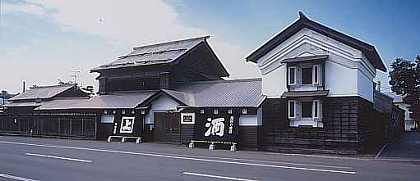
Takasago Shuzo was originally established in 1899 in Asahikawa City in Hokkaido, under the name Kohiyama Shuzo (our family name). We struggled, but continued to produce sake during the war. In 1965, we merged with another sake brewer in Asahikawa, and changed our company name, as well as the name of our sake, to Takasago. Our white-walled kura, built in 1909, is one of the more attractive buildings in Asahikawa (see photo below).
Asahikawa has been called "the Nada of the North," because there was at one time a lot of sake being brewed there, and we are the oldest sakagura in the area. It is cold here, with the temperature regularly falling to -20C.
Needless to say, the snow is relentless in the winter. It is a wonderful environment in which to brew sake. We proceed bearing in mind the three principles set forth by our founder almost a century ago: The customer is number one, continue to try and make better and better sake, and always be learning.
The Sake
Our sake is, simply put, dry and balanced. Most of what we brew is light, with a flavor that spreads well across the palate. Approximately 63% of what we make is tokutei meishoushu (special designation) sake, which means it is "good" stuff. Of that 63%, 12% is ginjo-shu (premium sake). We would rather make quality than quantity.
The people
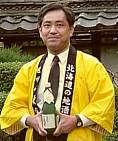
Our current president, Toru Kohiyama, is the third -generation kuramoto. About five years ago, he came to a great realization that led to a great decision. He realized that it would no longer be possible to compete with the large brewers from Nada and Fushimi when it came to selling standard sake. Their sake was simply too cheap, even here in Hokkaido.
"When I realized that it was a battle we could not win, I decided that we would focus on making good, craft sake, with a local flavor, much like Wagashi (Japanese sweets). I felt that this would help us survive, compete, and thrive.
Size and Special Characteristics
We brew about 4800 koku a year, which amounts to 900 kiloliters or so. Among that, the ration of special designation sake and ginjo-shu is higher than most sakagura in Japan. While this volume is comparatively higher than many smaller breweries, it is certainly still a relatively small amount. This allows us to maintain our high brewing standards
The name Ichiya Shizuku means "drip overnight," which is precisely how we press the sake, that is, how we separate the clear sake from the fermenting rice lees. The moromi mash is put into canvas bags, and the sake is allowed to drip out slowly overnight, with no pressure at all applied to the mash. While this may seem wasteful, it creates the most wonderful, light and clear sake possible.
Toji (Master Brewer) and Kurabito
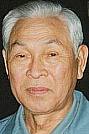
Our toji, Tokujiro Sasaki, is 69 and going strong. He is of the Nanbu school of toji, centered in Iwate Prefecture. Helping him are 13 others, all of them skilled sake -brewing veterans. Year after year, cold day after cold day, they labor together at their craft to make our sake what it is.




 salmon,
 King prawns prepared for frying

